
Worn Before It’s Bought
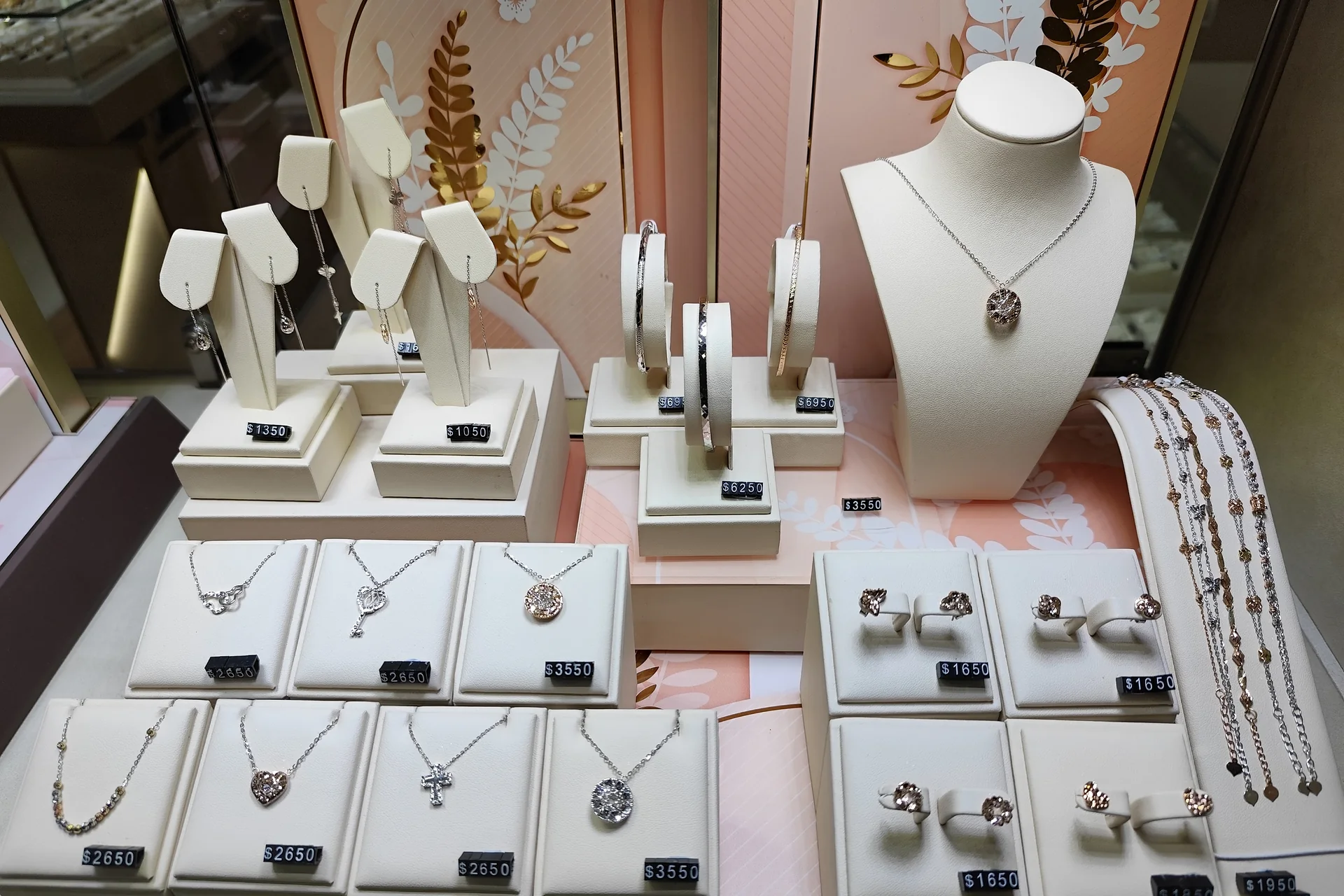
At a jewelry window, most questions answer themselves. The necklace hangs where a pendant falls, the earrings stand at the height of an ear, and someone inside will put the ring on your hand.
Online, a packshot on white has to do all of that. Online stores took 22% of US jewelry sales in 2025, and demand is still climbing.
Forecast growth in 2026, by luxury category
- Jewelry+8 to 10%
- Eyewear+4 to 6%
- Watches+3 to 5%
- Beauty+2 to 4%
- Apparel+1 to 3%
- Leather goods0 to 2%
- Shoes−3 to −5%
Source: Bain & Company, luxury study, November 2026. Personal luxury goods. The lighter end of each bar is the top of the forecast range.
Shoppers are also buying fewer pieces and paying more for each one.
US jewelry sales in 2025, change against 2024
- Pieces sold−5.6%
- Revenue+5.6%
- Spend per piece+14%
Source: Tenoris (Edahn Golan), January 2026. Fewer pieces left the counter, and each one cost more.
When fewer, pricier pieces are chosen on a screen, the picture carries the sale. Three things a counter does without thinking are now the hard part online: showing the piece worn, showing it at its size, and showing it with the pieces it goes with. AI can now do all three.
The photo nobody has time to shoot

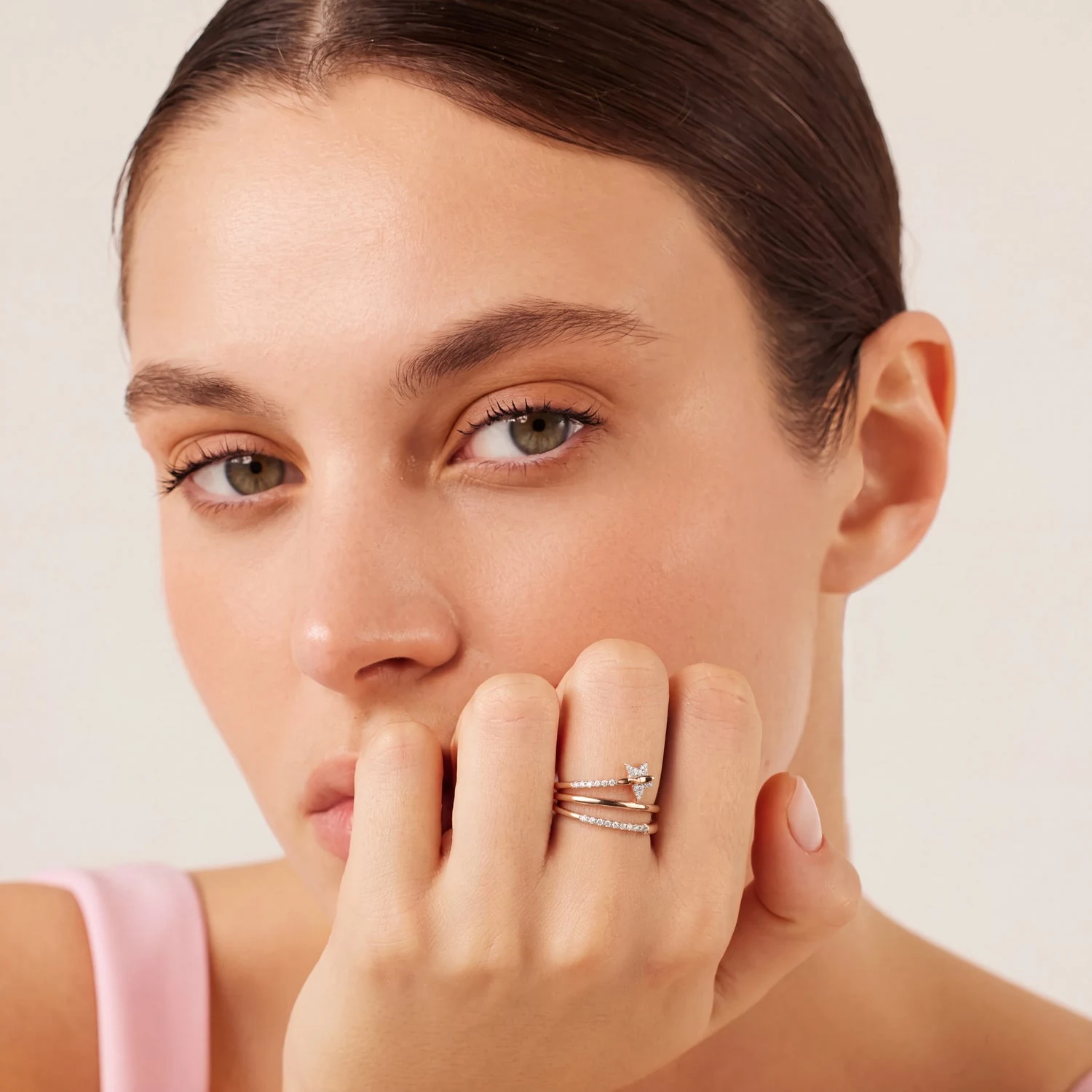
Jewelry sells on a person. When Signet rebuilt the websites of Kay, Jared and Zales this year, it led with realistic on-model photography. Many stores still can’t keep up.
- 23%
- of online stores show no product on a human modelBaymard Institute
- Up to $350
- for one product image from a photographer, from $50, before rush feesShopify, 2026
A shoot needs a model, a photographer, a studio and a retoucher, booked weeks ahead. Whatever misses it goes live on white. Generative AI has changed that clock.
How long a new picture takes
Campaign imagery at Zalando
- Before generative AI6 to 8 weeks
- With generative AI3 to 4 days
One jewelry model photo
- A photo shootA day on set
- AI Model Studio5 to 10 minutes
The scale stretches: each mark is a longer unit of time. Zalando’s figures as told to Reuters, May 2025. The studio time is per finished model photo, nudges included.
Shoppers have a fair worry. In a June survey by Baymard, 60% said knowing an image was AI-made would lower their confidence. What they fear is a ring that was changed, or a person who isn’t there.
The tools that work for jewelry leave the piece alone. AI places it from its own packshot onto a model photo, at its listed size, in the photo’s light. The model can even come from the brand’s past shoots.
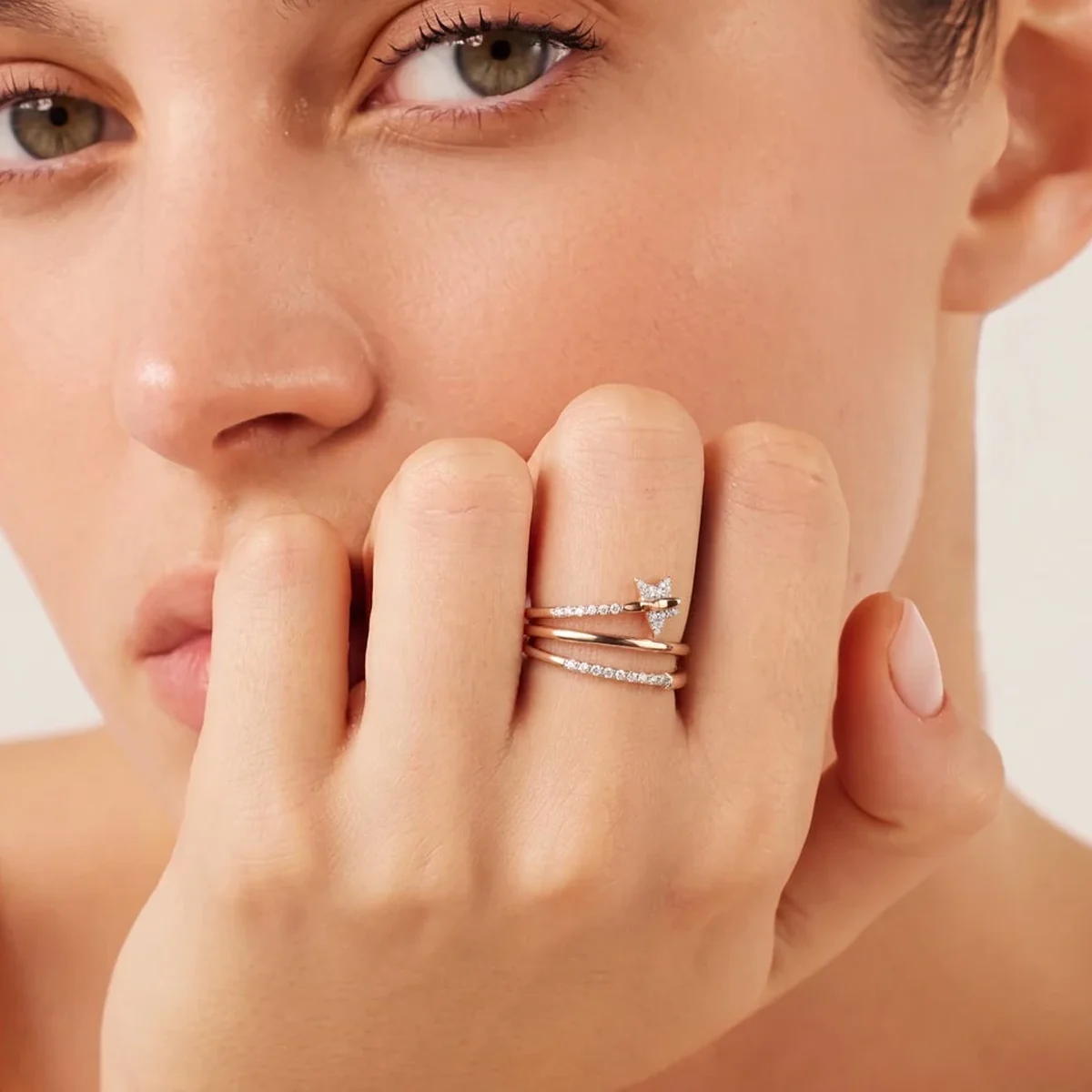

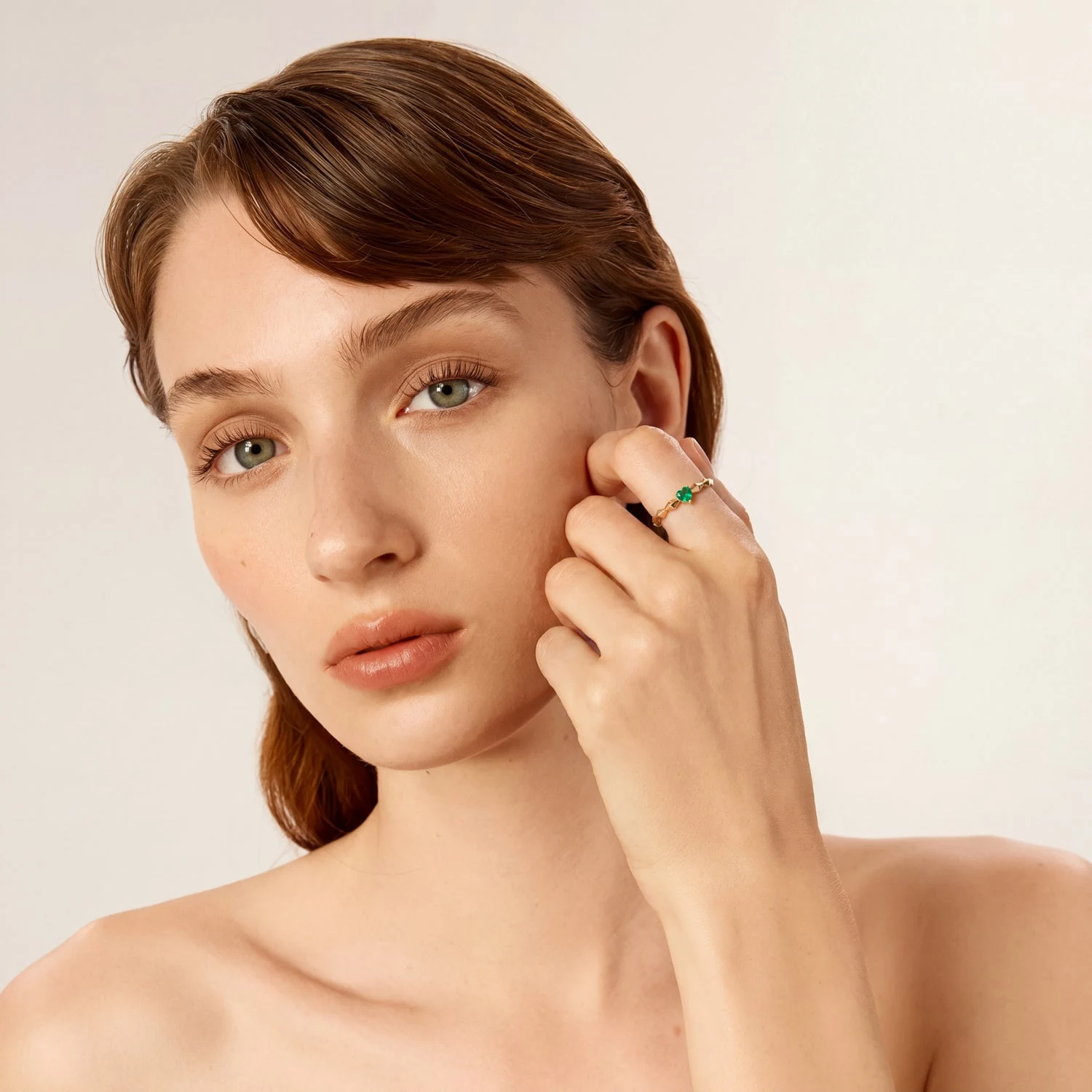
Kısmet by Milka makes its on-model photos this way with our AI Model Studio, at 5 to 10 minutes a photo. Rings, earrings, bracelets and necklaces all go on, and a set can share one photo.
Small on the screen, smaller in the box
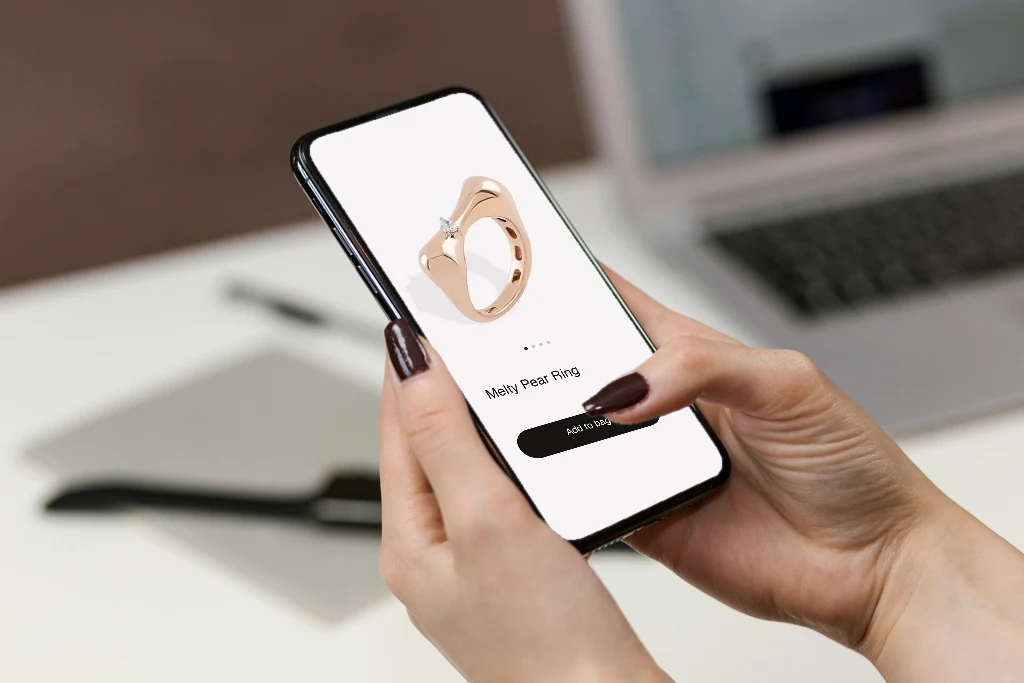
A packshot has no scale. Shoppers try to read it anyway, and when they guess wrong, the piece comes back.
- 42%
- of shoppers try to judge size from product photosBaymard Institute
- 37%
- of online stores show no photo that gives a sense of scaleBaymard Institute
- 45%
- of shoppers have returned something over wrong or misleading informationSalsify, 2026
Lighter jewelry makes it worse. With gold near record prices, the World Gold Council sees shoppers in most markets choosing lighter, lower-carat pieces, the kind a close-up flatters most.
Virtual try-on is the answer, and it has grown up. The first wave was a camera filter: a flat drawing floating over a moving hand, with metal like plastic and stones that never caught the light.
The new wave is photographic. The shopper takes one photo of their hand, and AI renders the piece into it: its stones, metal and finish, lit by that room, at its size. It answers what a packshot can’t: what exactly am I buying, and how does it look on me?
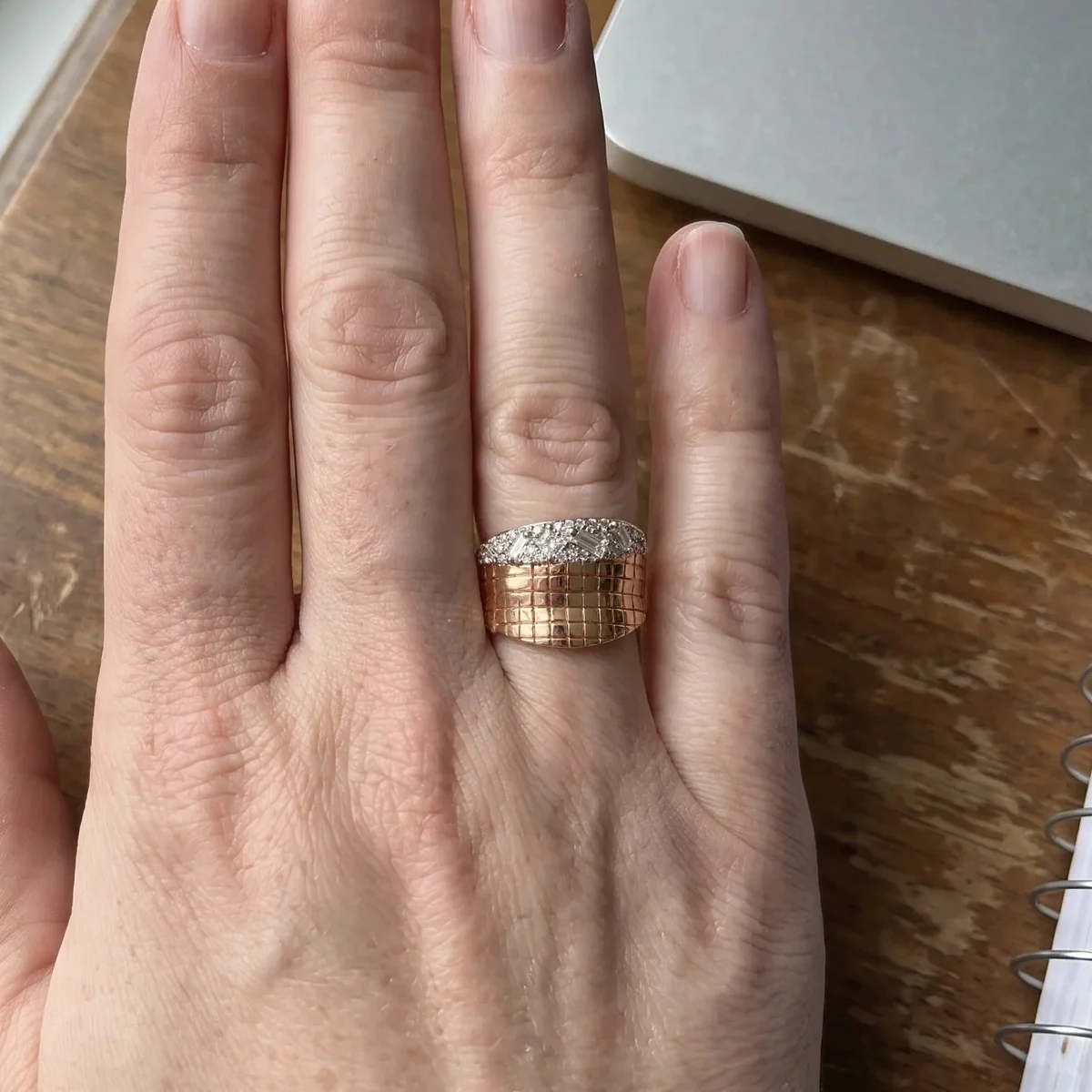
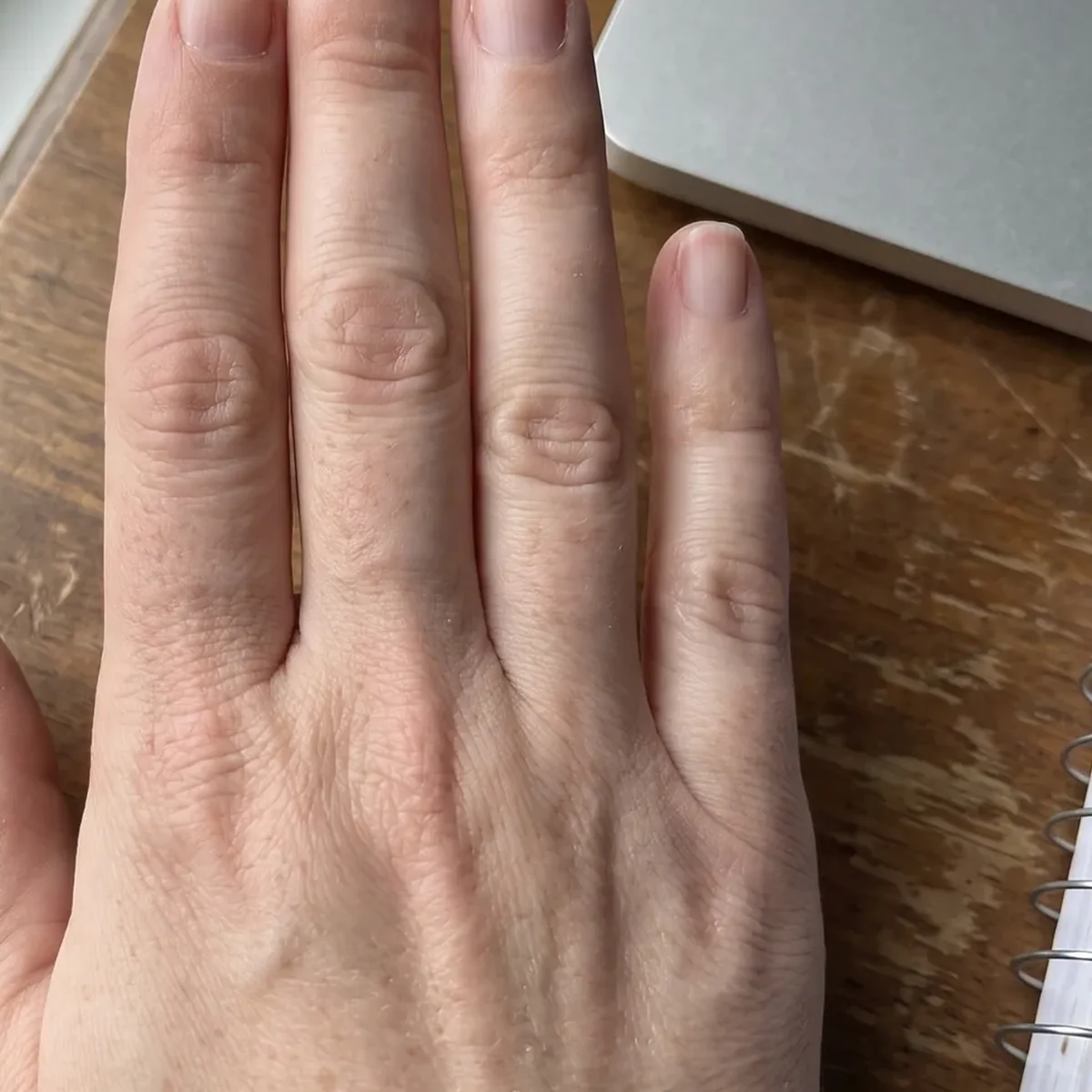
It moves sales. The online jeweler Jewlr saw conversion rise 10.4% and revenue per visitor 15% after adding try-on.
Our Jewelry Try-On works the photographic way for necklaces, rings and bracelets, and runs at Kısmet by Milka on selected rings and bracelets. On a store it is one button on the product page, live within a week.
Bought in threes

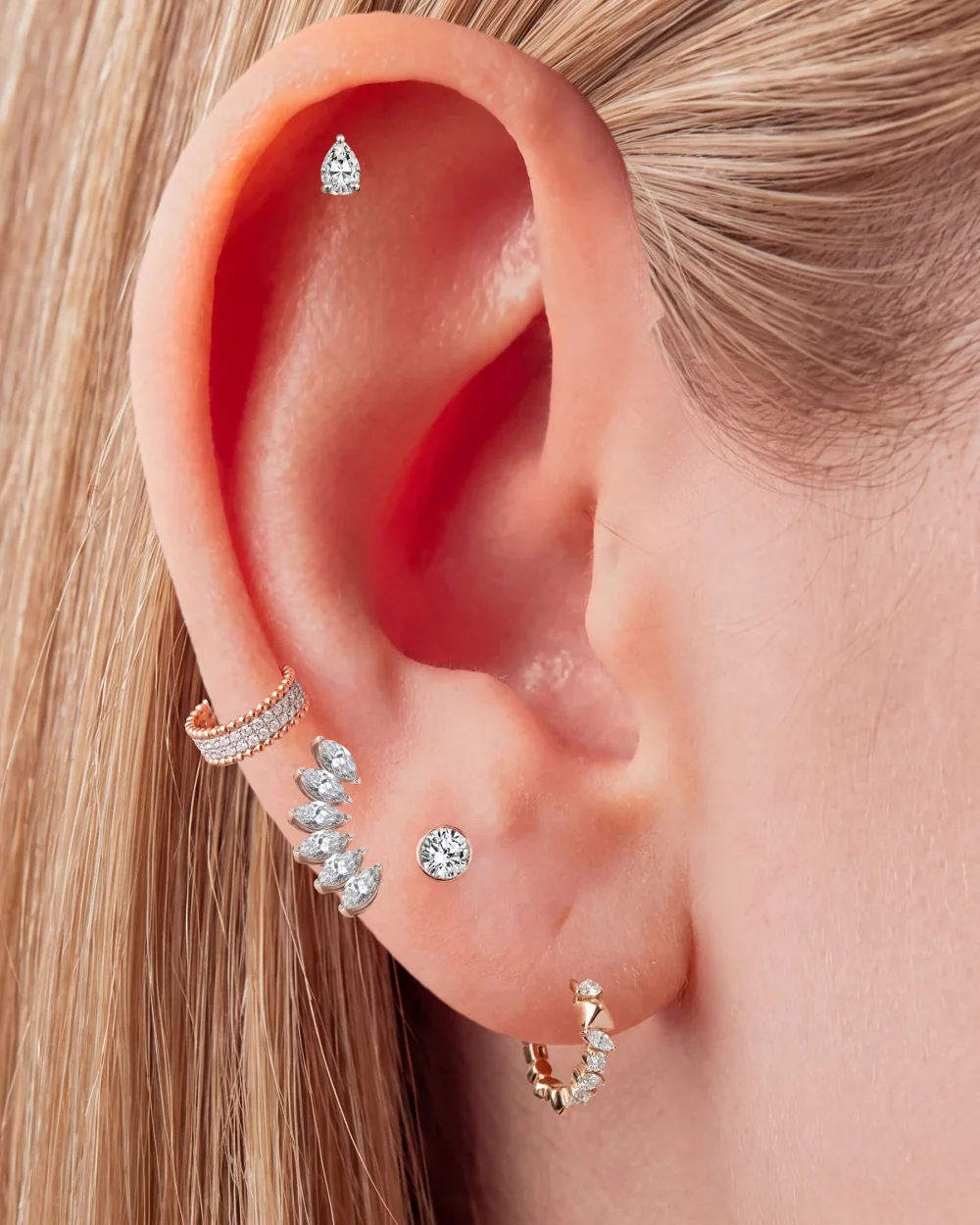
The ear became a project, and wrists followed. A stack is a basket, yet the product page still shows each piece alone on white.
- 5 to 9
- piercings on the average customer of Studs, the US ear piercing chainStuds, via JCK
The brands that sell stacks best now build them on screen. Astrid & Miyu’s Stack Curator lets shoppers fill each piercing on a pictured ear and add the whole stack to the bag, and the brand says it lifts basket size.
One curated ear, priced piece by piece
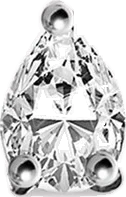
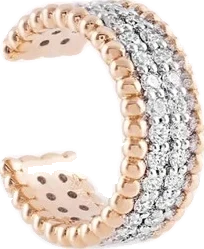
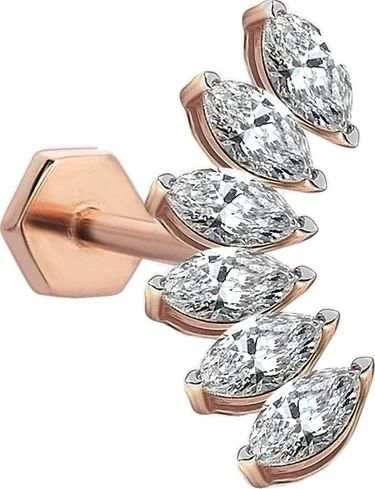
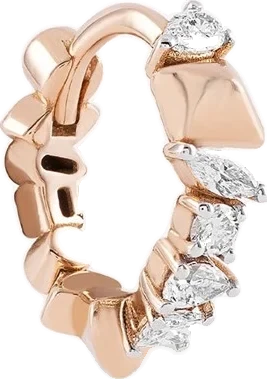
- Pear Petit stud $285
- Duo Tiara Cuff $1,720
- Sei Marquise $1,850
- Curium hoop $1,595
- Invisible Grande stud $160
$5,610 in one order, when the shopper can see the five together.
Kısmet by Milka prices on its international store, November 2026. The stack is the one in the photo below.
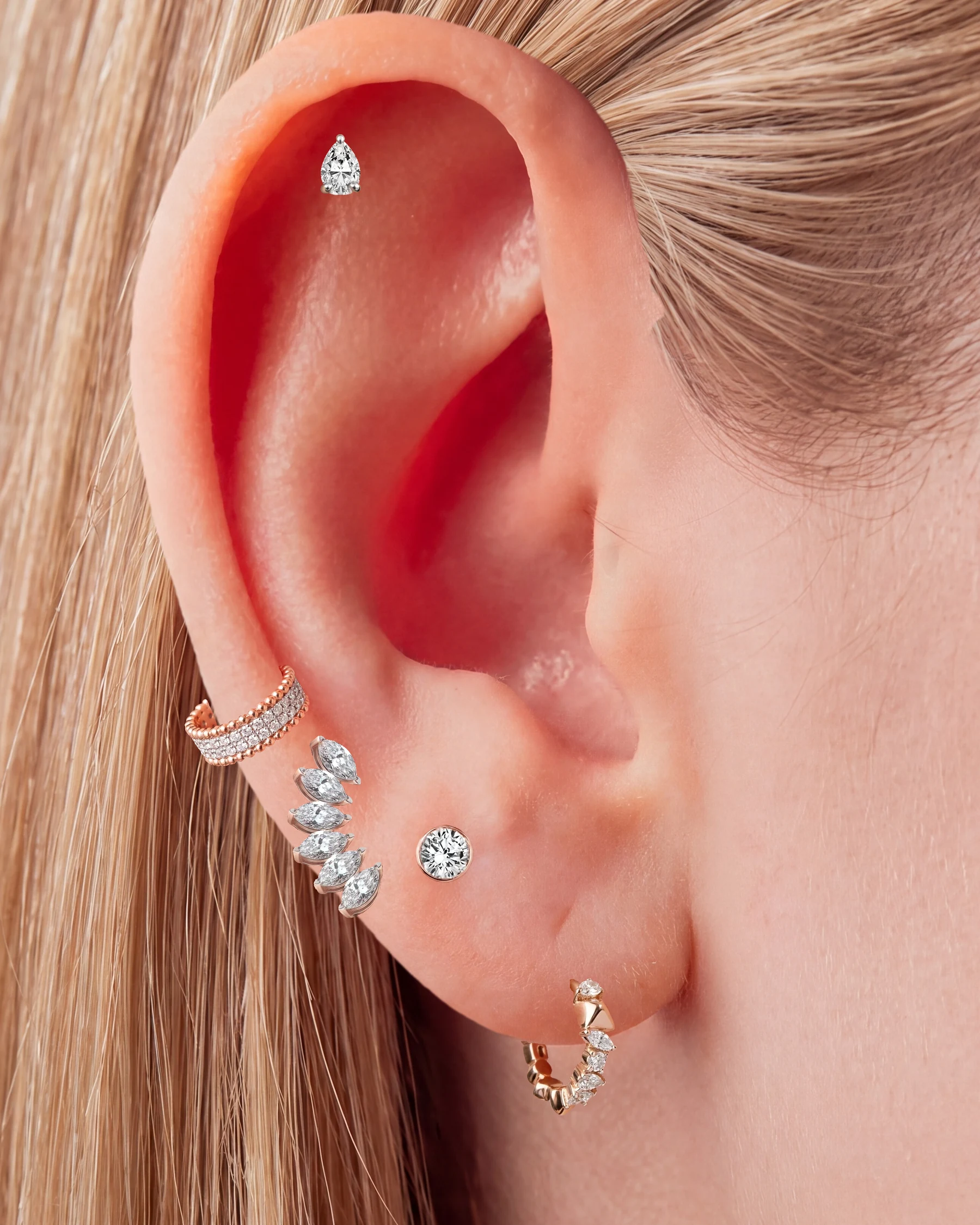
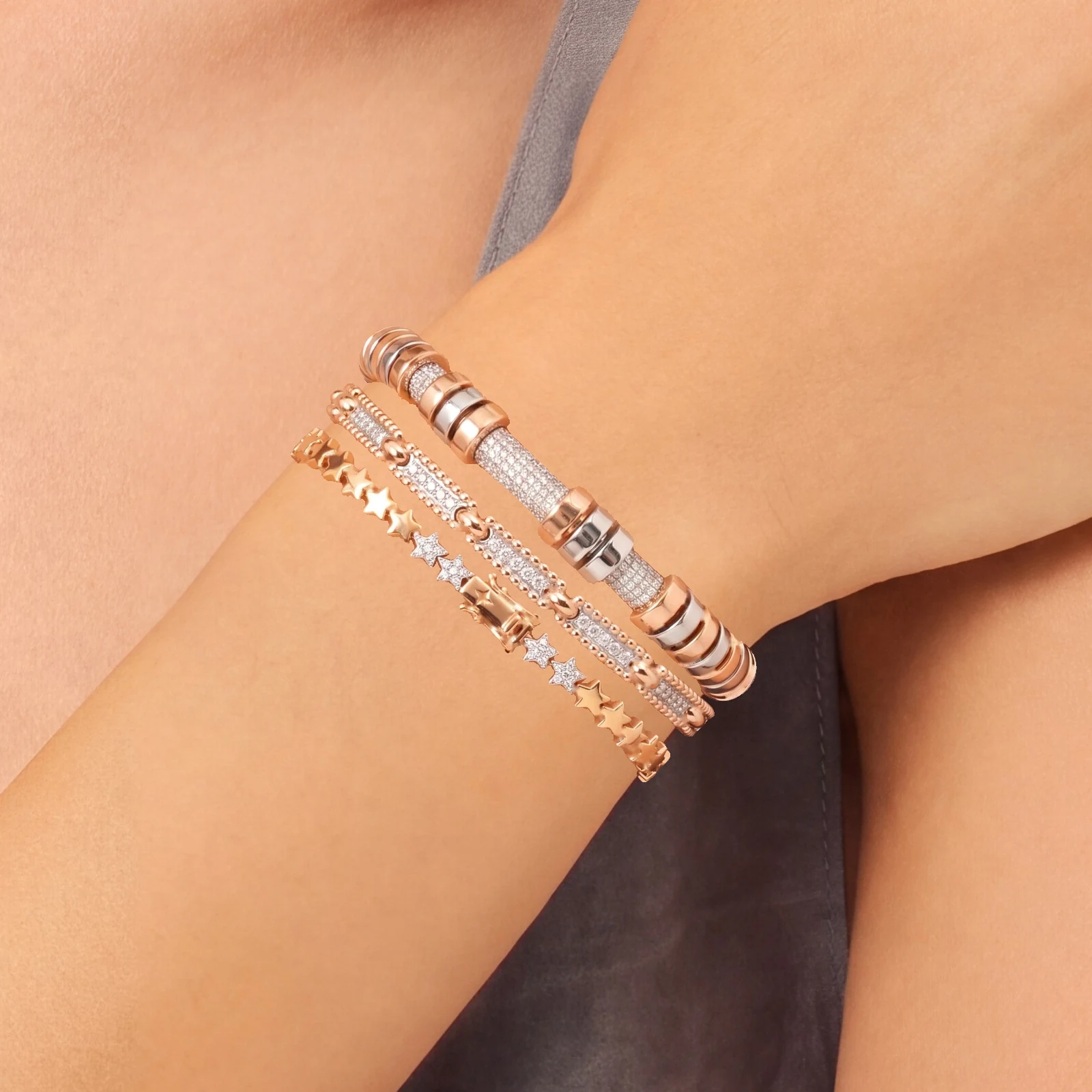
A stack builder needs two things: each piece at its listed size beside the others, and the total with one button to buy the lot. Our Ear Stack and Bracelet Stack builders do both, straight from the products already in the catalog.
The store that answers first
More of the first look now happens inside an AI assistant, and those shoppers arrive ready to buy.
- +693%
- traffic from AI assistants to US retail sites over the 2025 holidaysAdobe
- 90%
- better conversion from those visitors than from other traffic, September 2026Adobe
When shoppers ask AI, the brand is often missing
Source: Bain & Company, 2026.
An assistant recommends what it can read and show. Staying ahead now looks less like a new channel and more like a better product page:
- A worn photo for each pieceOn the day it launches, in the light of the collection.
- The piece on the shopperAt its size, in a picture they believe.
 Looks sold as looksWith the total and one button to buy.
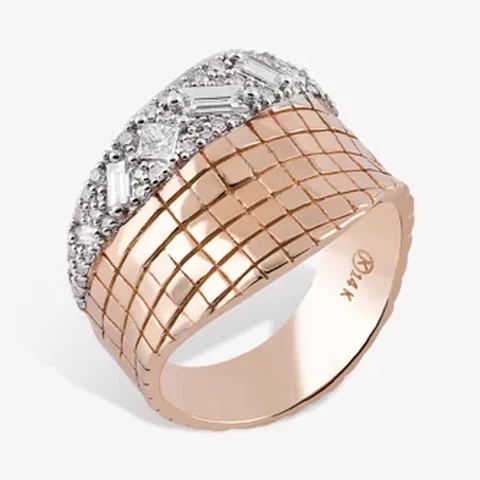 Facts written plainlySizes, metals and stones a person and a machine both read.
None of it is a long project anymore. The tools in this piece, the ones we build at Alfreya, go onto a store in about a week, starting from the photos a jeweler already has.
The window will always do what it does. The window most shoppers stand at now is six inches wide, and it can put the piece on their hand too.

